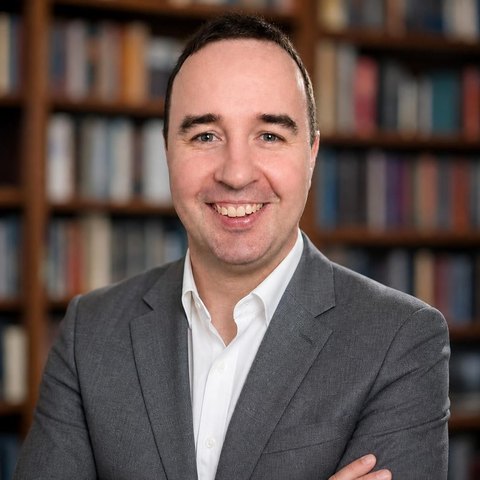
Dr. Norman Peitek
Postdoctoral Researcher, Chair of Software Engineering
Saarland University · Saarland Informatics Campus
About
AI assistants now write a substantial share of new code, yet developers remain accountable for the software they ship. They must understand the code that matters. My research bridges human and machine understanding of software. It is built around one core measure: the mental effort a developer needs to reason about code. I measure this effort in the brains of developers and compare it with how large language models process the same code.
I am a postdoctoral researcher in Sven Apel's ERC Advanced Grant Brains on Code at Saarland University.
During my doctorate at Chemnitz University of Technology and the Leibniz Institute for Neurobiology (summa cum laude, university dissertation award, nominated for the GI Dissertation Award), I developed a multimodal framework that measures program comprehension with fMRI, EEG, eye tracking, and psychophysiology. Our fMRI study on code complexity received an ACM SIGSOFT Distinguished Paper Award at ICSE, and a neurosurgical team recently drew on this work to preserve a software engineer's programming abilities during brain tumor surgery.
Before research, I worked as a software consultant on Android, Node.js, and .NET projects. As co-founder of Future Studio, I have written 200+ programming tutorials and 70 videos with more than 1.5 million views.
37 publications · 1'000+ citations · h-index 13 (Google Scholar, October 2026)
Research: Human and Machine Understanding of Software
My long-term goal is a linking of human reasoning processes and mechanistic representations in LLMs. Human data then become a reference signal to evaluate and improve AI assistants, and LLMs become testable theories of human program comprehension.
Human understanding
Measuring and predicting program comprehension with fMRI, EEG, and eye tracking. We showed that code complexity metrics capture programmers' cognitive load only to a limited degree (ICSE 2021), that confusing code elicits a neural response resembling that to unexpected words (Sci. Rep. 2026), and that EEG separates high- from low-performing programmers (ESEC/FSE 2022).
Machine understanding
Cognitively informed interpretability of code models. With probing, activation patching, and steering, we study how LLMs represent what makes code hard for developers: for example, where misleading names and comments derail LLMs (preprint 2026) and how LLMs converge when refactoring code for readability (preprint 2026).
Bridging human and machine understanding
Comparing human and model processing of the same code. We showed that code that confuses programmers also tends to surprise LLMs, and that LLM-internal measures can point to code regions that are difficult for humans (ICSE 2026). Where humans and models diverge points to where generated code is likely to be misunderstood in review.
Selected Publications
- Are Humans and LLMs Confused by the Same Code? An Empirical Study on Fixation-Related Potentials and LLM Perplexity Proc. International Conference on Software Engineering (ICSE), pp. 2609–2621, ACM, 2026
- Fixation-Related Potentials Reveal that Confusing Program Code Elicits a Late Frontal Positivity Scientific Reports, 16:16833, 2026
- On the Influence of the Baseline in Neuroimaging Experiments on Program Comprehension ACM Transactions on Software Engineering and Methodology (TOSEM), 35(3):83, 2026
- Correlates of Programmer Efficacy and Their Link to Experience: A Combined EEG and Eye-Tracking Study Proc. Joint Meeting on Foundations of Software Engineering (ESEC/FSE), pp. 120–131, ACM, 2022
- Program Comprehension and Code Complexity Metrics: An fMRI Study Proc. International Conference on Software Engineering (ICSE), pp. 524–536, IEEE, 2021
- A Look into Programmers' Heads IEEE Transactions on Software Engineering (TSE), 46(4):442–462, 2020
† co-advised doctoral student · ‡ supervised thesis student
News
- Our abstract on how the brain processes confusing code, compared with natural language, appeared at AMLaP 2026, a psycholinguistics conference, in Saarbrücken. Anna-Maria presented our work.
- Our experience report on teaching empirical thinking with AI coding assistants appeared at FSE-SEET 2026.
- New preprints on predicting program comprehension with foundation models of human cognition and activation patching to understand LLM behavior on misleading code.
- Our study showing that confusing code elicits a late frontal positivity was published in Scientific Reports.
- Co-organized EMIP 2026, the International Workshop on Eye Movements in Programming, in Marrakech.
- One paper each at ICSE 2026 (Are Humans and LLMs Confused by the Same Code?) and ICPC 2026 (Type Annotations and Identifier Naming).
Awards
- 2022University Dissertation Award, Chemnitz University of Technology; nominated for the GI Dissertation Award
- 2021ACM SIGSOFT Distinguished Paper Award, ICSE 2021
- 2019Best Tool Demo Award, ICPC 2019
- 2011–2014Full study scholarship, Friedrich Naumann Foundation for Freedom
Teaching and Supervision
My teaching focuses on empirical thinking: judging code, tools, and claims by evidence rather than hype. Students design and run their own studies, work in teams with professional practices, and test claims about AI assistants against data.
Courses at Saarland University
- 2023–2026Software Engineering Lab (lecture and team project; mandatory, up to 258 students)
- 2023, 2025, 2026Empirical Software Engineering Research (lecture with project phases; created the course)
- 2025Seminar: AI Coding Assistants: Hype or Game Changer? (168 applicants for 13 places; published at FSE-SEET 2026)
- 2024Seminar: The Eye of the Beholder: What Can Eye-Tracking Data Reveal about Code?
- 2022, 2023Seminar: Software Engineering Research in the Neuroage
- 2015, 2016Mobile and Distributed Systems (in German), Bingen University of Applied Sciences
Service
Organization
- since 2022Steering Committee, International Workshop on Eye Movements in Programming (EMIP)
- 2019, 2021, 2023–2026Organizer, EMIP
- 2023Proceedings Co-Chair, ICPC
Reviewer
- TSE, TOSEM, EMSE, TOCE, CHI, JSS, Human Brain Mapping, Cognitive Science, PLOS ONE, and others
Program committees
- since 2024ICSE New Ideas and Emerging Results (NIER)
- since 2024International Computing Education Research (ICER)
- since 2024MSR Registered Reports
- since 2023Human-Centric Experiments in Software Engineering (HUMAN)
- 2018–2024ESEM, HFSD, EMIP, ETRA-ET4S, ICPC
Invited Talks
- 2023Neuroscience & Software Engineering: A New Wave of Research on Programmers, Humboldt University of Berlin
- 2019, 2021Your Brain on Code, Magdeburger Developer Days
- 2019, 2020Program Comprehension Research with Neuroscience Methods, Chemnitz University of Technology
- 2019Program Comprehension Research with Neuroscience Methods, Saarland University